 Naranchuluun
 “LEVEL UP: POLITICAL FINANCE WITH INTEGRITY” PROJECT
|
Facts & Figures
Total cost of the project: 727,666 Euros Duration of the project: 24 months
|
PROJECT DESCRIPTION
The “Level Up: Political Finance with Integrity” project aims to improve political finance regulatory frameworks in Moldova, Mongolia and Paraguay. With a two-year life-span (January 2018 to December 2019), the project focuses on how these regulations could better empower women and young politicians; and how they can protect the integrity of public policy making from the influence exerted by money in politics. The International Institute for Democracy and Electoral Assistance (I-IDEA) is the project’s managing organization and works together with three other implementing partners: CCET in Moldova, OSF in Mongolia and Semillas in Paraguay. These four organizations have an established track record as impartial and honest brokers of expertise on political finance.
The project leverages on existing momentum on these three countries to reform and improve their respective political finance system. They have all experienced strong public demands to improve the integrity of politics given resent corruption scandals. In addition, their systems have undergone reforms that require further development. This, in combination with good timing in relation to their electoral cycle—general elections in Paraguay in April 2018, parliamentary elections in Moldova in November 2018 and legislative elections in Mongolia in 2020—, increased political leaders’ interest and willingness to discuss political finance reforms. In Moldova, political parties expressed interest to review and address the lack of clarity in the existing laws in a multiparty setting, as well as to develop their compliance capacities and further learn from international experiences. In Mongolia, all political parties publicly support the idea of openness and transparency in political financing. In Paraguay, representatives of the three largest national political parties stated that the 2018 general elections will provide an opportunity to address reforms to increase women’s political participation.
In Paraguay and Mongolia, Level Up offers inter-party dialogue especially targeted at the parties’ leadership, as well as women and youth leaders (the “supply side” of reform), to build consensus on the legal and policy frameworks affecting political party financing to ensure a level playing field for women and youth. Meanwhile, in Mongolia and Moldova these dialogue opportunities focus on protecting public policy from the undue influence of money in politics. In Moldova, the dialogue involves political parties with parliamentary representation, that qualified for the second round during the last presidential elections, and that receive state funding and declare their income. In Mongolia, the dialogue centres on political parties with parliamentary representation or those that qualified to the presidential elections run-off over the last five years. In Paraguay, the dialogue engages registered political parties with parliamentary representation over last five years.
The project furthermore combines this inter-party dialogue approach with multi-stakeholder consultations involving oversight agencies, watchdog CSOs, media representatives, donors and experts (the “demand side” of reform), to building an informed public discussion, raising public awareness and increasing accountability on these matters.
Finally, the project offers all these actors capacity development on dialogue and compliance, technical assistance and sensitization, including through an online system (the Best Political Finance Regulation Test) that provides analysis and informed opinions about regulatory options.
By December 2019, Level Up will have, inter alia:
- Convened and facilitated inter-party dialogue processes with high-level representatives of political parties representing the plurality of the political spectrum and with influence over political finance reform, particularly regarding reforms to level the playing field for women and youth, and compliance to protect public policy from undue influence of money in politics
- Contributed to create consensus on a path towards political finance reform based on a consultative process that reflects international best practice and contemporary research
- Fostered a multi-stakeholder informed public debate on the nexus between political finance and inequality in political representation and undue influence of money in politics
- Championed a new political finance reform agenda. In Moldova, the agenda includes reporting regulations for regional level Central Electoral Commission (CEC) bodies. In Mongolia, the agenda includes measures designed to provide a level playing field for candidates, with at least three measures address women or young candidates’ access to funding. In Paraguay, the agenda includes measures to ensure access of women candidates to political finance, based on the recommendations of the 2013 and forthcoming EU Electoral Observation Mission reports, and proposals from 2016 Parity Bill
- Increased the capacity of political parties to comply with finance reporting requirements in Moldova and Mongolia
- Provided tailored-made technical assistance, capacity development and knowledge products on political finance and inter-party dialogue, including global comparative practices on political finance regulations and dialogue facilitation techniques
PROJECT LAUNCH
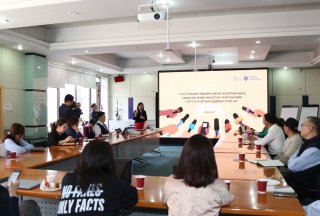
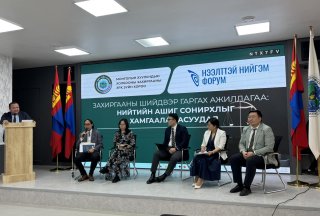
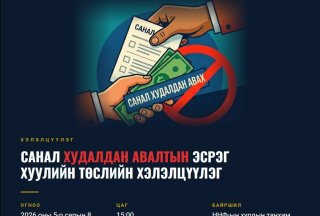
Level Up: нээлтийн үеийн өөрт байгаа зургаас 2-3-г оруулах (надад нээлтийн зураг байхгүй байна): Level Up: Political financing with integrity project launched in May 2018, which was attended by political party members, civil society organizations, academics and media
ACTIVITIES
Comprehensive assessment of the current legal framework and implementation
Catalina Uribe Burcher from International IDEA, with the support of the external political finance expert Fernando Casal Bertoa, is carrying out the legal assessment. The mission was therefore an opportunity to interview a series of actors in the country, to gather their views and perspectives on the implementation of the current political finance legal framework, as well as the prospects for the forthcoming political parties law, thus complementing the desk research already carried out as part of the project. (team photo will be added)
The team interviewed senior officials from the Mongolian National Audit Office, the General Electoral Commission and the Independent Agency for Against Corruption. The team also met with Members of Parliament from the Mongolian People’s Party (both its leadership, which currently chairs the Task force on the Political finance law, as well as youth leaders), the Democratic Party (both the leadership and youth leaders), the Mongolian People’s Revolutionary Party, the HUN party, the Civil Will and Green Party, and the Social Democracy Mongolian Women’s Union (which aggregates MPs from various parties working on gender). Members of various NGOs were also interviewed, namely VEC, WL, TI, WFC and MIDAS, as well as a group of academics from the UE, NUM and EFU.
Political Finance in Mongolia Assessment and recommendations
Монголын улс төрийн санхүүжилтийн эрх зүйн орчин
INTERNATIONAL EXPERT WHO CONDUCTED COMPREHENSIVE ASSESSMENT: (Fernando’s photo) Fernando Casal Bértoa is an Assistant Professor in the School of Politics and International Relations at the University of Nottingham (United Kingdom). He is member of the OSCE/ODIHR “Core Group of Political Party Experts” and co-director of REPRESENT: Research Centre for the Study of Parties and Democracy. His work has been published in Jounal of Politics, European Journal of Political Research, Sociological Methods and Research, Electoral Studies, West European Politics, Party Politics, Democratization, East European Politics and Societies or East European Politics, among many others. His last book, co-edited with Ingrid van Biezen, is The Regulation of Post-Communist Party Politics. He has been recently awarded the 2017 Gordon Smith and Vincent Wright Memorial Prize as well as the 2017 AECPA Prize for the Best Article.
Fernando - What do we know about party finance regulations?
https://www.youtube.com/watch?v=PIarTRQ_13k&feature=youtu.be
TRAINING PROGRAM ON ‘GENDER PERSPECTIVES AND YOUTH PARTICIPATION ON ELECTIONS AND POLITICAL FINANCE’
A training program on gender perspectives and youth participation on elections and political finance was successfully conducted in June 2018 under following title:
- Political Finance and Women’s Empowerment: 18-19
- Political Finance and Youth Empowerment: 21-22.
The trainings were facilitated by Yvonne Goudie, the BRIDGE facilitator and aimed to “introduce the main principles, structures and institutions underlying a credible and workable political financing regulatory framework, especially relating to the inclusion of youth and women”. It also focused to create a venue for sharing experiences and good practices on how best to promote the participation of youth and women in electoral and political processes in election and political processes more broadly (2-day training photos will be added).
INTERNATIONAL EXPERT WHO FACILITATED TRAINING: Yvonne Goudie is a democratic governance practitioner with over 20 years’ experience working for various agencies including: Australian Electoral Commission, International IDEA (Institute for Democracy and Electoral Assistance - Sweden), UNDP (United Nations Development Programme - USA), UN Women (USA), IFES (International Foundation for Electoral Systems - USA), Carter Centre (USA), Democracy Reporting International (Germany), Conciliation Resources (UK) and Transparency International (Germany). She specializes in the niche area related to learning and capacity development for democratic governance, in the intersecting areas of gender and inclusion and empowerment – as well as election management. Yvonne leads on consultancy projects, supporting national governments and development agencies to design, implement and evaluate electoral improvement projects, through research, training and events. Facilitating workshops and dialogues with election management staff, candidates and members of parliament, members of civil society, journalists, police and security staff, teachers and other electoral stakeholders - Yvonne specializes in the Asia Pacific region, as well as in the MENA and Caucuses regions. She was the Coordinator of the DG (Democratic Governance) BRIDGE project and Curriculum Coordinator of the Elections BRIDGE project (as well as an Expert category facilitator). Yvonne has been an electoral educator, a politics teacher and writer, a trainer, facilitator and curriculum developer in the field of democracy education for national and global projects. Democracy education is her number one passion.
Political finance - Overview - ENG (27 June).ppt
Gender Inclusion - ENG (27 June).ppx
Youth Inclusion - ENG (27 June).ppx
International standards - ENG (27 June).ppx
Introduction to Political Finance Regulation (Slide Resource) - ENG (27 June).ppt